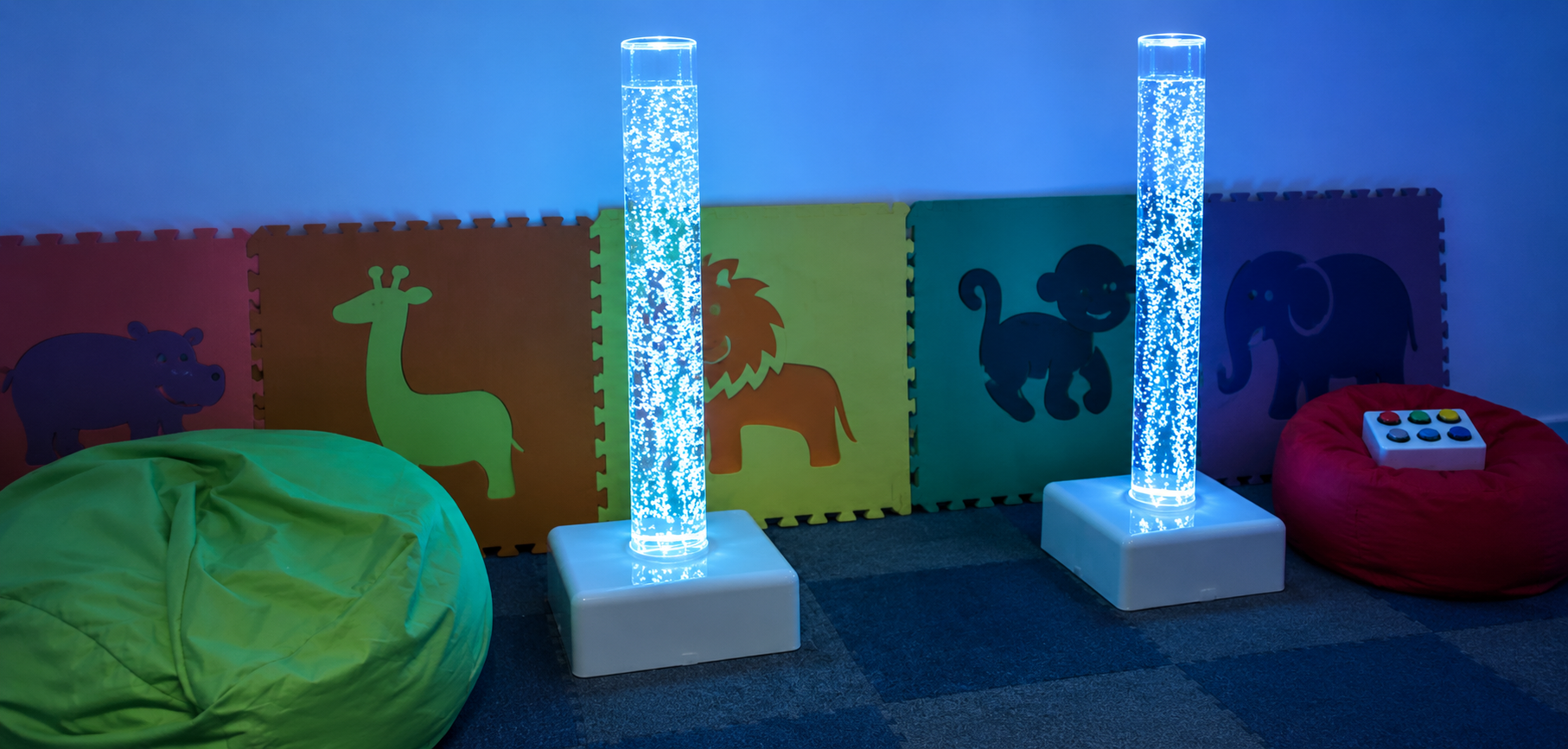
Calm, well-planned classrooms can make a real difference to how pupils feel, focus and learn. As schools place greater emphasis on wellbeing, SEND support and inclusive learning, the design of the classroom environment is becoming increasingly important.
A therapeutic learning environment is not about creating a clinical space. It is about using layout, colour, furniture, storage and zoning in a thoughtful way to reduce overstimulation and help pupils feel safe, settled and ready to learn.
WHY CALM LEARNING SPACES MATTER
Modern classrooms can easily become overstimulating
In busy learning environments, excessive noise, visual clutter and constant stimulation can sometimes make it difficult for pupils to focus, regulate emotions and feel settled throughout the school day.
Many schools are now placing greater importance on creating calmer classroom environments that support wellbeing alongside learning outcomes. Thoughtful classroom design can help pupils feel more comfortable, supported and ready to engage.
A therapeutic learning environment is not about removing personality from a classroom. Instead, it focuses on creating balanced, organised and flexible spaces that feel safe, welcoming and easier to navigate for all learners.
KEY ELEMENTS OF A THERAPEUTIC CLASSROOM
Small design choices can have a big impact
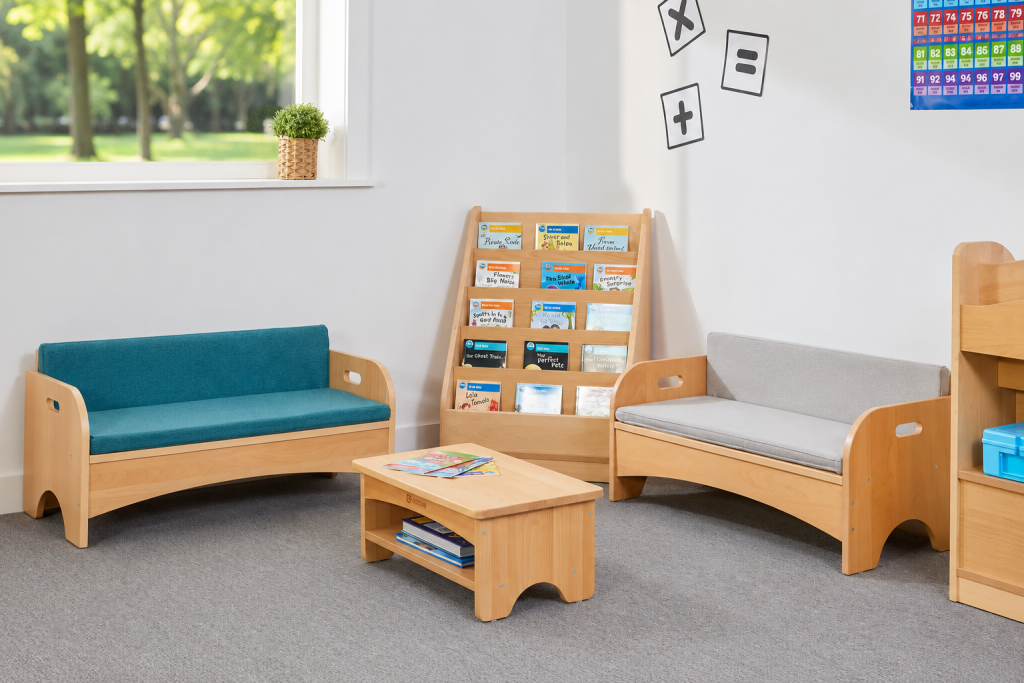
Creating a calmer learning environment does not necessarily require a full classroom refurbishment. In many cases, small and thoughtful adjustments to layout, furniture and organisation can help classrooms feel more welcoming, balanced and easier for pupils to navigate.
Many schools now look at classroom design more holistically — considering not only how a space looks, but also how it supports concentration, wellbeing, collaboration and independent learning throughout the day.
Natural Colours & Materials
Soft, neutral colours and natural wood finishes can help reduce visual overstimulation and create a calmer atmosphere within the classroom.
Flexible Learning Zones
Creating dedicated areas for reading, quiet work, collaboration or reflection can help pupils better understand and navigate the learning environment.
Organised Storage Solutions
Well-organised storage can reduce clutter, improve classroom flow and help create spaces that feel calmer and easier to manage.
Comfortable & Supportive Furniture
Soft seating, breakout furniture and flexible seating options can help schools create more adaptable learning environments that support a wide range of pupil needs.
SOFT SEATING AREAS
Create dedicated quiet and reading areas
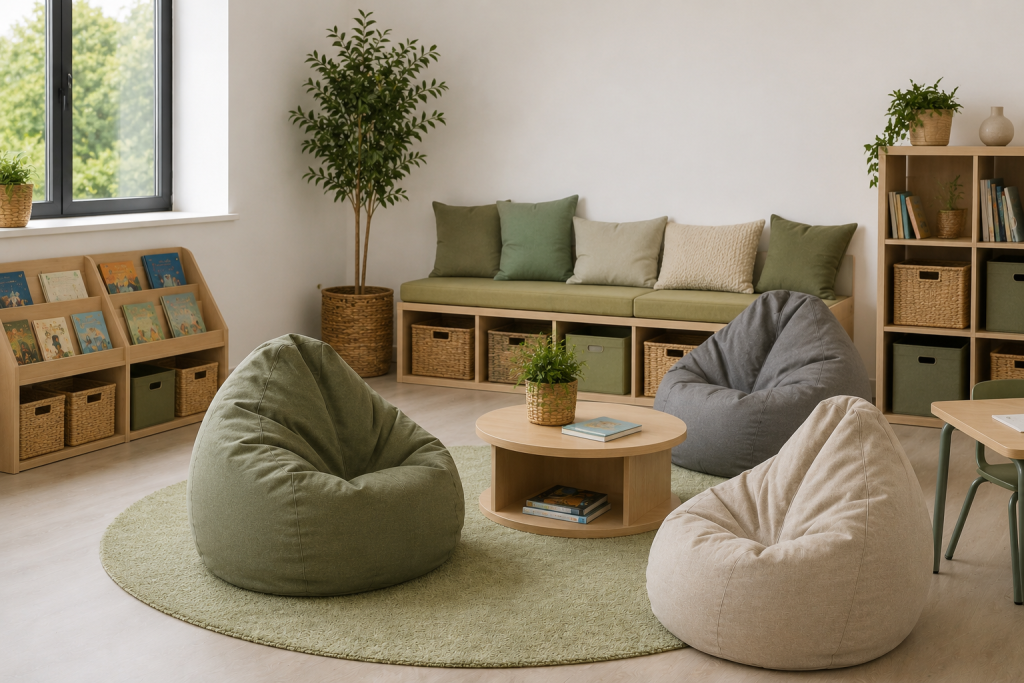
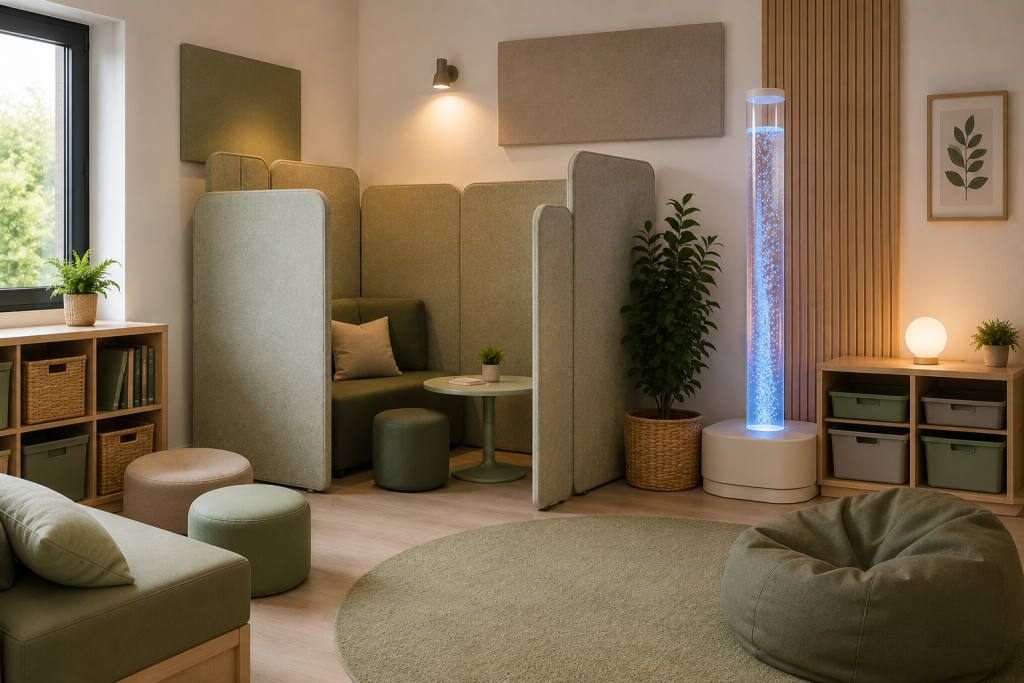
Creating smaller breakout spaces within the classroom can help pupils feel more comfortable and supported throughout the school day. Reading corners, nurture areas and quieter seating zones can provide opportunities for calm focus, independent learning and moments of reflection away from busier classroom activity.
These spaces do not need to be large or heavily themed. In many schools, simple additions such as soft seating, low-level book storage, natural finishes and clearly defined layouts can help create welcoming areas that pupils naturally gravitate towards.
PRACTICAL CLASSROOM DESIGN
Reduce visual clutter through thoughtful organisation
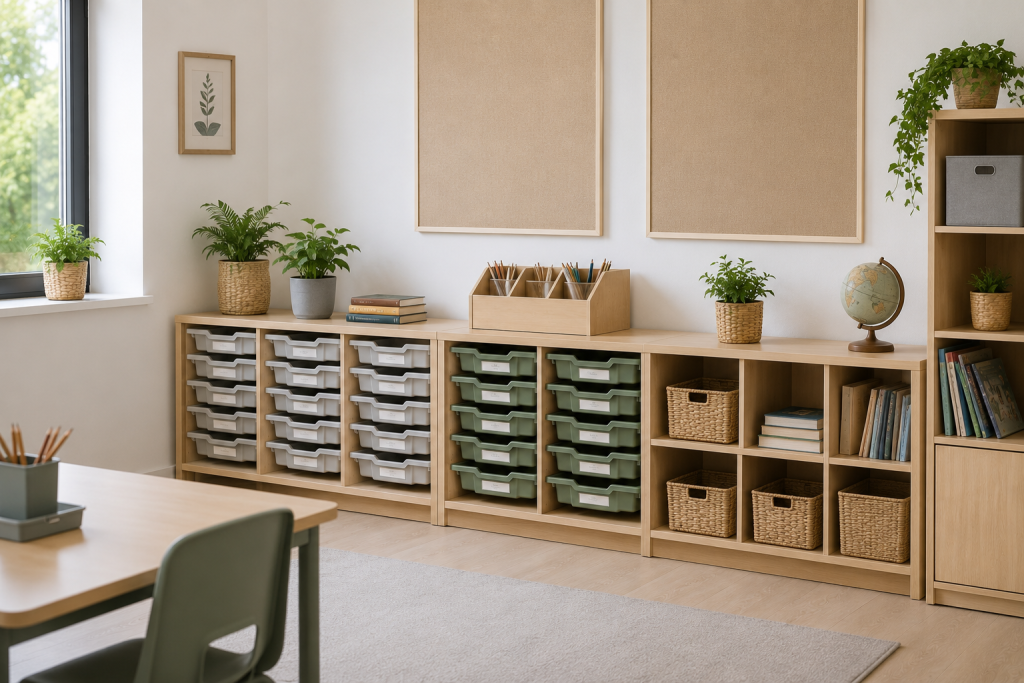
Busy classroom environments can quickly become visually overwhelming, particularly when resources, displays and furniture compete for attention. Creating more organised and clearly defined spaces can help classrooms feel calmer, more manageable and easier for pupils to navigate independently.
Simple adjustments such as low-level storage, clearly labelled resources, neutral display areas and better zoning can help reduce unnecessary visual distraction while still maintaining engaging learning environments.
Many schools are now moving towards more intentional classroom layouts that prioritise accessibility, organisation and pupil wellbeing alongside teaching and learning.
FLEXIBLE LEARNING ENVIRONMENTS
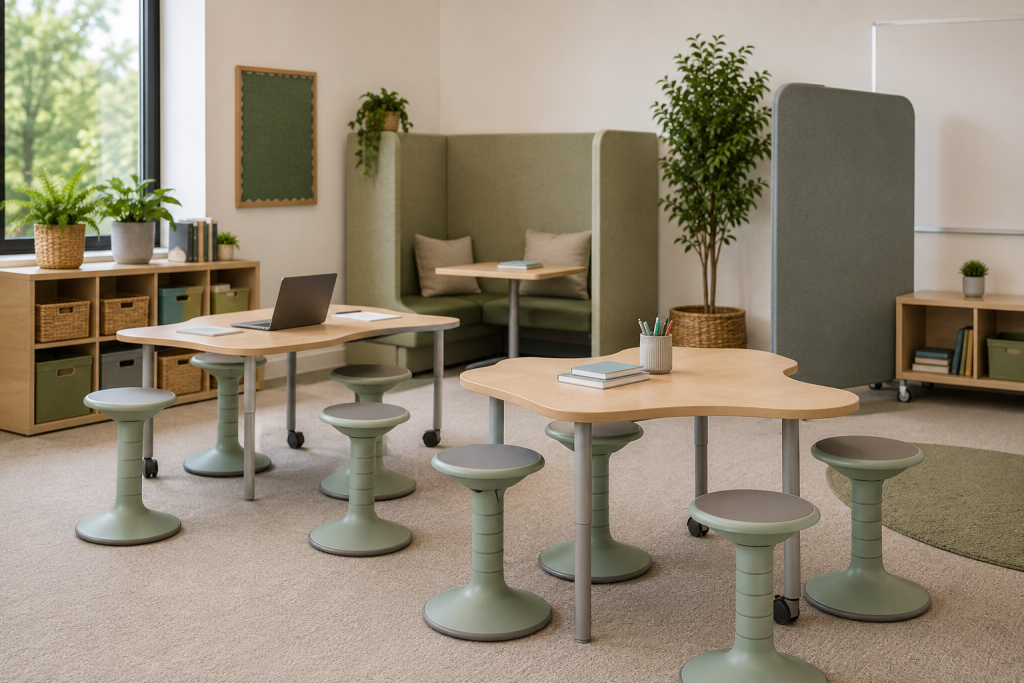
Use flexible furniture to support a range of pupil needs
No two pupils learn in exactly the same way, which is why many schools are introducing more adaptable furniture and breakout spaces into their classrooms and learning environments.
Flexible seating, collaborative furniture and modular layouts can help classrooms feel more responsive and inclusive while supporting a variety of teaching styles and learning activities throughout the day.
Simple additions such as soft seating, movable tables, breakout areas and quieter workspaces can help create environments that feel less rigid and more supportive for both independent and collaborative learning.
SENSORY & ENVIRONMENTAL CONSIDERATIONS
Lighting and acoustics can play an important role in classroom wellbeing
Classroom environments are shaped by far more than furniture alone. Lighting, acoustics and overall sensory comfort can all influence how pupils experience and interact with a learning space throughout the day.
Many schools are now exploring ways to reduce unnecessary noise, soften harsh environments and create quieter areas for focused learning, collaboration or reflection. Simple additions such as acoustic panels, room dividers, softer furnishings and better zoning can help classrooms feel calmer and more balanced.
Natural light, softer colour palettes and thoughtfully arranged layouts can also contribute towards learning environments that feel more welcoming, comfortable and supportive for both pupils and staff.
THOUGHTFUL LEARNING ENVIRONMENTS
Creating calmer learning environments is often about small, thoughtful changes
Creating therapeutic and wellbeing-focused learning environments does not necessarily require a complete classroom redesign. In many cases, smaller adjustments to furniture, layout, storage and zoning can make a meaningful difference to how a space feels and functions throughout the school day.
As schools continue to place greater emphasis on inclusion, wellbeing and flexible learning, classroom environments are increasingly being designed to support not only teaching and learning, but also comfort, focus and emotional wellbeing for both pupils and staff.
Whether introducing quiet reading areas, improving classroom organisation, adding flexible seating or creating calmer breakout spaces, thoughtful design choices can help schools create learning environments that feel more welcoming, adaptable and supportive for all learners.
RELATED ARTICLES
Explore More Classroom Design Ideas

How to Set Up a Dark Den in Your SEN Classroom
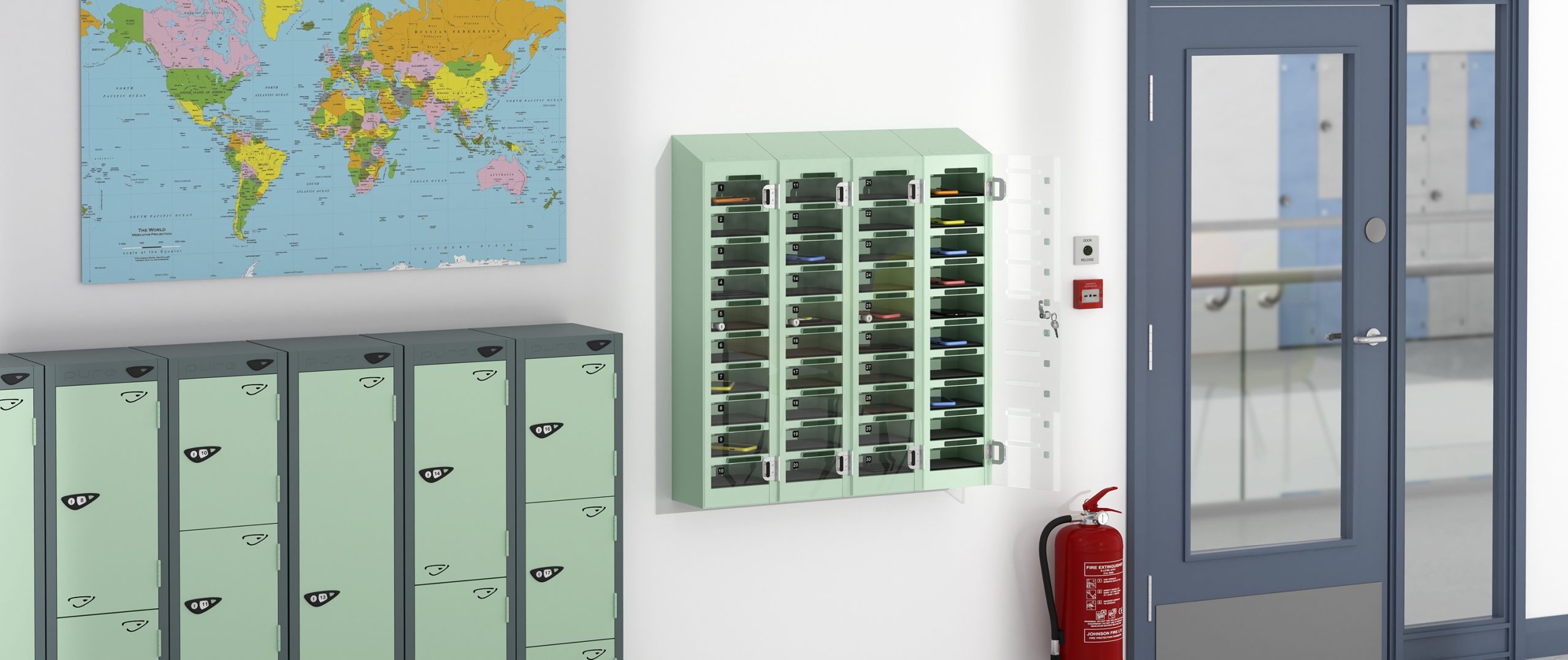
Mobile Phone Lockers for Schools: A Practical Guide to Creating a Phone-Free Learning Environment