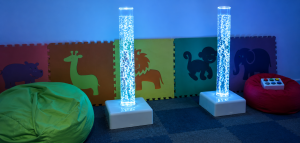
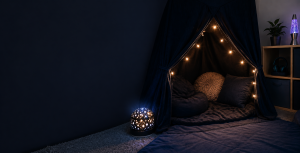
A dark den is one of the most versatile and impactful additions you can make to a SEN classroom or sensory space. With the right setup, a small corner of your school can become a calm, immersive environment that helps pupils regulate, explore and engage — without a dedicated sensory room.
This guide walks you through everything you need to create an effective dark den: how to choose the right space, what lighting and resources to use, how to build the structure, and what schools need to consider around safety and supervision.
WHY DARK DENS WORK FOR SEN
Low-light environments have a powerful calming effect on the brain
Research consistently shows that reducing visual stimulation helps children with sensory processing differences — including those with autism, ADHD and anxiety — to regulate their nervous system and engage more calmly with activities.
A dark den works by removing the dominant visual noise of a standard classroom: bright overhead lighting, busy wall displays, movement and colour. In its place, carefully chosen sensory light sources provide just enough visual input to engage without overwhelming.
For many pupils, a dark den is not just a calming space — it is a space where they feel genuinely safe. That safety is the foundation for learning.
GETTING STARTED
You don't need a dedicated sensory room
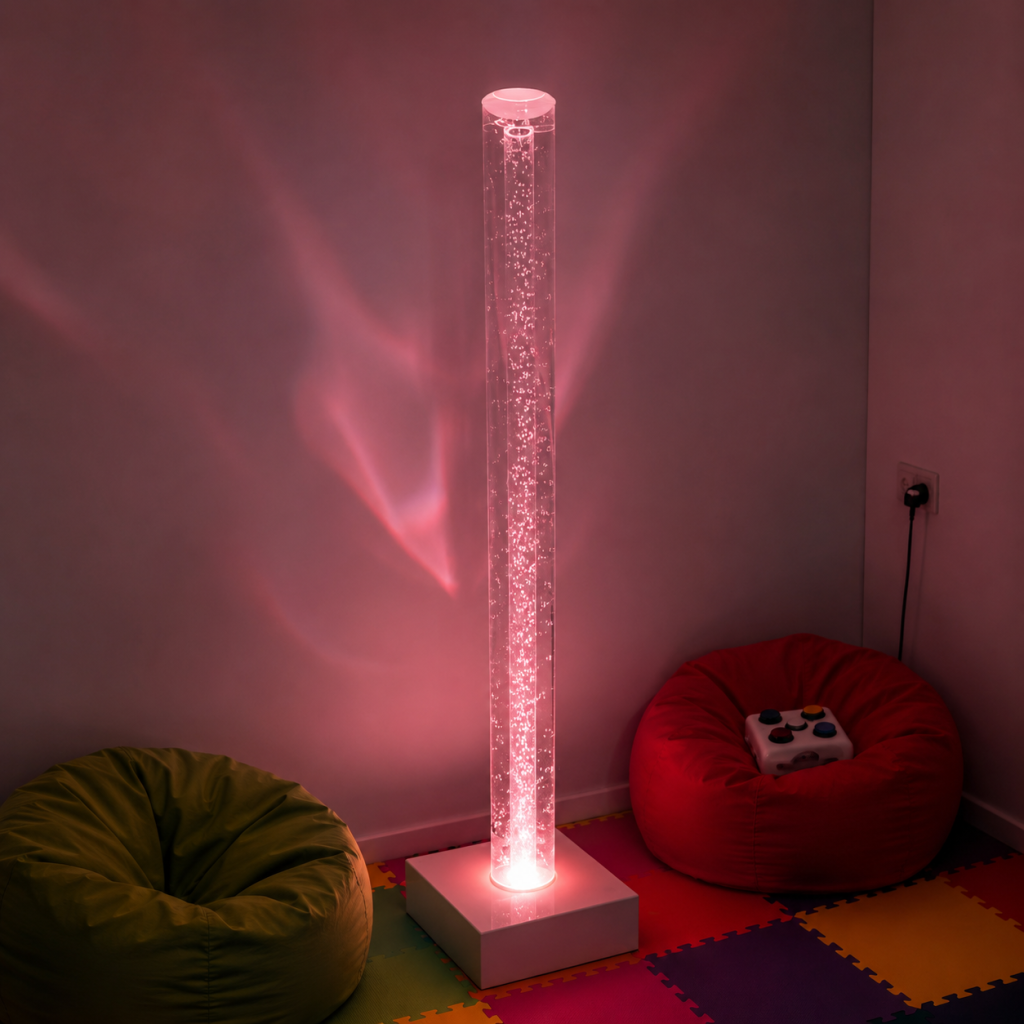
One of the biggest misconceptions about dark dens is that they require a purpose-built sensory room. In reality, many of the most effective dark dens in schools are created in an underused corner of a classroom, a small alcove, under a staircase, or inside a reading nook — using a simple pop-up tent or blackout sheet to enclose the space.
When choosing your space, look for somewhere that:
- Can be partially or fully darkened without disrupting the rest of the room
- Is large enough for 1–2 pupils and an adult to sit comfortably
- Has access to a power socket or can accommodate rechargeable lighting
- Is away from high-traffic areas, so it feels genuinely separate and calm
- Can be supervised easily from outside the den
Even a space as small as 1.5m × 1.5m can work well for an individual pupil or small group session.
💡 OSI Tip: If you don’t have a permanent space, a pop-up blackout tent or a simple canopy frame with a blackout sheet works just as well. The structure matters less than the atmosphere inside it.
SENSORY LIGHTING
Light is the most powerful tool in any dark den
The right lighting transforms a dark corner into a genuinely therapeutic space. For SEN pupils, the key is lighting that is soft, controllable and visually engaging without being overwhelming.
Avoid overhead fluorescent lights completely. Instead, look for portable, battery-powered or rechargeable LED lights that offer colour-changing capability — so staff can dial the atmosphere up or down depending on the child and the session.
What to look for in dark den lighting:
- Colour-changing settings — different colours create very different moods
- Remote control or simple on-device controls for easy adjustment
- Rechargeable — no trailing wires or dependency on sockets
- Portable — can be carried, hung or repositioned easily
- Water-resistant — IP65 or above for school use
- A+ energy rated for sustainability
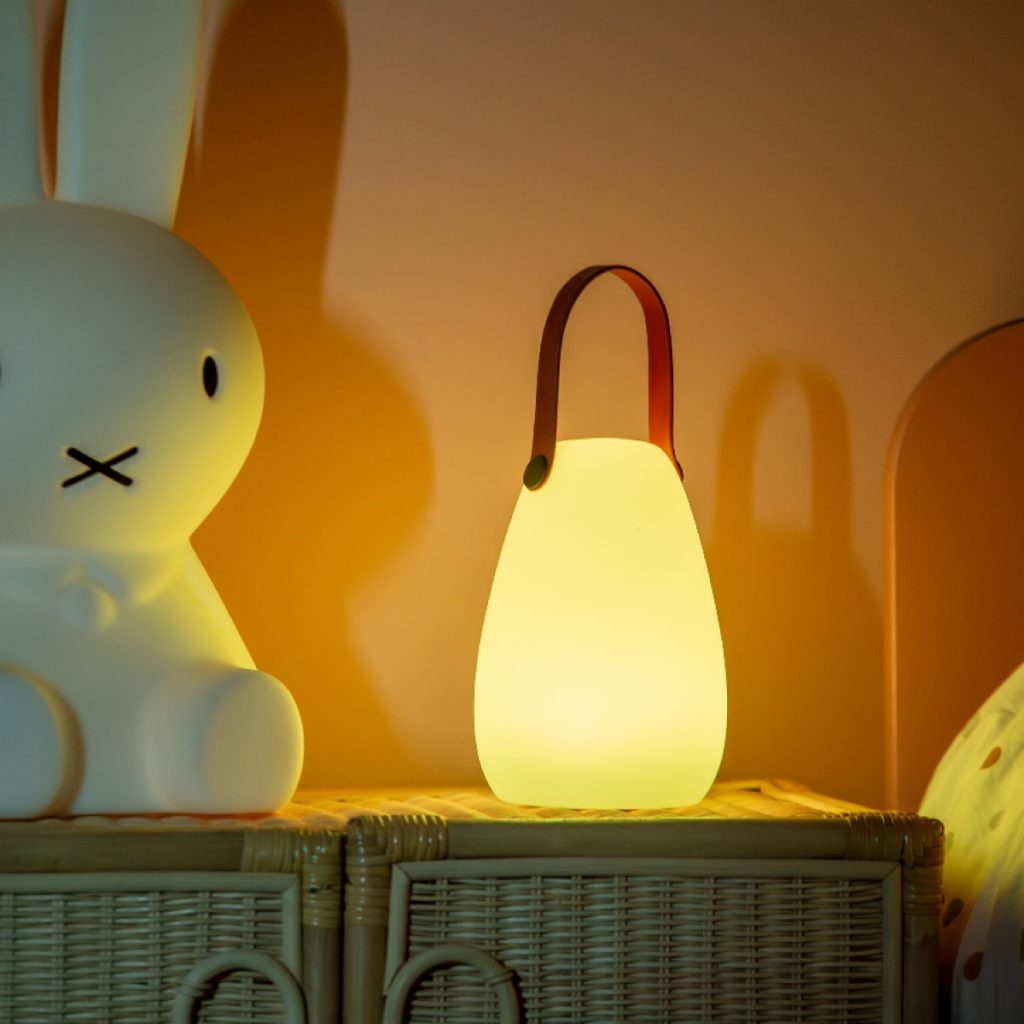
The tickit® Sensory Glow Lanterns are designed with all of these needs in mind. Sold in a pack of 6, they can be hung inside a den, handed to a child, or grouped together to create a soft, immersive light display — all controlled by a single simple remote.
THE STRUCTURE
Creating the enclosure — what works in schools
The dark den structure is what gives the space its sense of enclosure and calm. It doesn’t need to be permanent or expensive. Schools successfully use a range of approaches depending on their space and budget.
Common options for schools:
- Pop-up blackout tents — self-supporting, easy to fold away, available in various sizes
- Canopy frames with blackout fabric — more permanent, can be built into a corner
- Commercial dark den units — purpose-built dens with built-in seating and attachment points for lights
- DIY curtain or drape enclosures — hung from the ceiling or a frame, using blackout curtain fabric
- Under-table dens — a simple table draped with blackout fabric creates a surprisingly effective small space
Whichever structure you choose, ensure there is always a clear, unobstructed exit point and that the den can be supervised from outside. Avoid fully sealed or enclosed structures that cannot be monitored.
INSIDE YOUR DARK DEN
Sensory resources that work well in low-light spaces
Once your enclosure and lighting are in place, the resources inside the den make the biggest difference to how engaging and therapeutic the space becomes. Keep it simple — a dark den works because it reduces stimulation, not increases it.
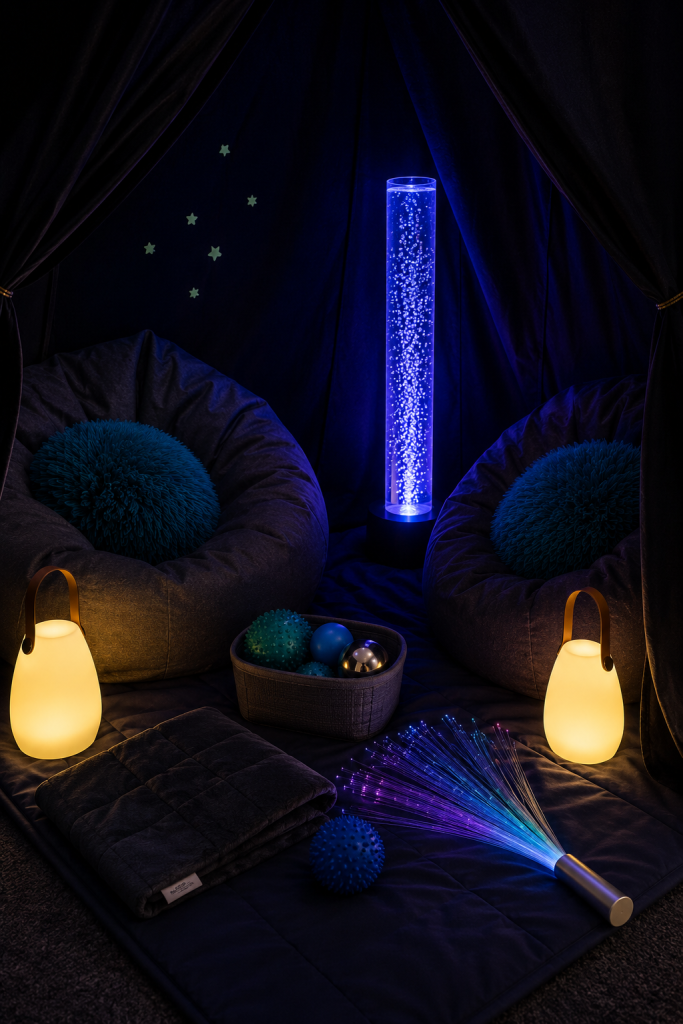
Recommended resources for inside a dark den:
- Soft lighting: Colour-changing lanterns, fibre optic wands, glow cushions
- Tactile resources: Sensory balls, textured cushions, weighted lap pads
- Comfortable seating: Low-level bean bag, floor cushion or padded mat
- Simple interactive items: A single glow toy or fidget resource — not a collection
- Music or sound (optional): A small bluetooth speaker with nature sounds or calming music
Avoid overcrowding the space. The magic of a dark den is in what you remove, not what you add. Start with one or two items and build up based on individual pupil responses.
SAFETY & SUPERVISION
What schools need to know before setting up a dark den
Dark dens are safe, low-risk resources when set up thoughtfully. There are a few practical considerations for schools to keep in mind.
Adult supervision: Dark dens should always be used under adult supervision. Staff should be able to monitor a child inside the den without entering, and the child should always be able to exit easily and freely.
Fire safety: Avoid placing electrical items directly on soft furnishings. Use rechargeable lighting where possible to reduce trailing cables. Check that any blackout fabric meets your school’s fire safety requirements — blackout sheets sold for educational use should carry relevant certifications.
Electrical ratings: If using plug-in items, ensure they are properly rated for educational environments. Look for A+ energy-rated products. For items that go near or inside soft dens, an IP65 water-resistant rating (as found on the tickit® Sensory Glow Lanterns) adds an important layer of safety.
Individual needs: Always consider the individual pupil’s needs before introducing them to a dark den. For some children, enclosed dark spaces may increase anxiety rather than reduce it. Introduce the space gradually, with the child in control of entering and exiting.
Mobile Phone Lockers for Schools: A Practical Guide to Creating a Phone-Free Learning Environment
Read More »