
A practical guide to UK fire safety standards, furniture compliance, and what schools need to know.
Fire safety in schools isn’t just about alarms, extinguishers, and evacuation plans — the furniture used throughout classrooms, corridors and communal areas also plays a crucial role in reducing risk.
From upholstered seating in reception areas to storage units in classrooms, every item must meet specific fire safety standards to ensure compliance, protect occupants, and limit the spread of fire.
Understanding fire safety school furniture requirements is essential for schools, academies and contractors alike. In this guide, we break down the key regulations, what they mean in practice, and how to ensure your spaces remain compliant.
Why Fire Safety Matters in School Furniture
Schools are high-occupancy environments with strict legal responsibilities. Furniture plays a significant role in overall fire safety and, if incorrectly specified, can increase risk.
- Helps reduce fire spread
- Limits harmful smoke and toxic fumes
- Supports safe evacuation routes
- Ensures compliance with UK legislation

Key Fire Safety Regulations (UK)
The Regulatory Reform (Fire Safety) Order 2005
This is the primary legislation covering fire safety in non-domestic premises, including schools. It requires a formal fire risk assessment and the appointment of a responsible person.In practice, this means furniture must not contribute to fire risk and should be considered as part of the overall fire strategy.
BS 7176 – Upholstered Furniture (Low to Medium Hazard)
This standard applies to soft seating such as sofas, armchairs and breakout furniture.In most school environments, furniture should meet at least a medium hazard level and be tested for resistance to ignition sources such as matches and cigarettes.
Crib 5 (BS 5852) – Higher Fire Resistance
Crib 5 is a more stringent fire safety standard typically required in higher-risk or high-traffic areas.Furniture tested to Crib 5 standards offers greater resistance to ignition and is commonly specified in commercial education environments.
BS EN 13501-1 – Reaction to Fire Classification
This classification system applies to materials and surfaces such as wall panels, noticeboards and acoustic products.Ratings range from A (non-combustible) to F, with schools typically aiming for Class B or better in key areas.
Fire-Retardant Materials
Many education furniture products are manufactured using fire-retardant fabrics, foams and laminates.It’s important to always request certification and not assume compliance.
What Furniture Do These Regulations Apply To?
Fire safety regulations can apply to a wide range of furniture across different areas of a school.
- Soft seating such as sofas, armchairs and beanbags
- Storage units including cupboards, bookcases and lockers
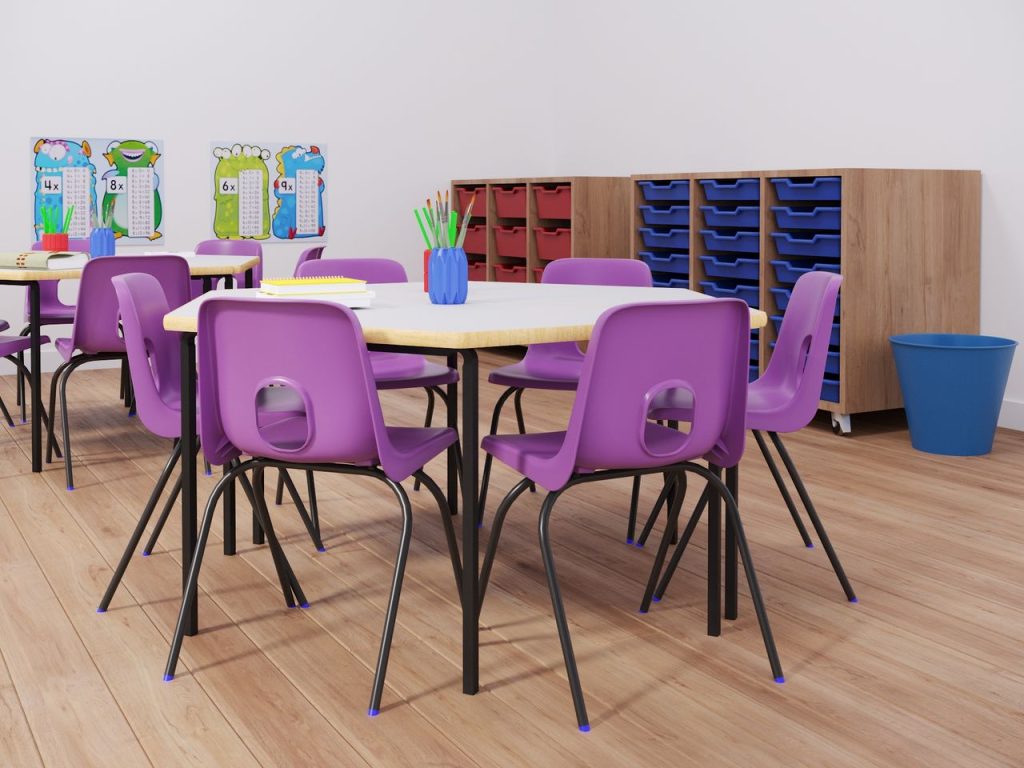
- Classroom furniture such as tables and chairs
- Specialist environments including science labs, food tech and DT rooms
Different environments may require different levels of fire resistance depending on usage and risk.
Common Fire Safety Mistakes Schools Make
Buying Domestic Furniture
Residential furniture often does not meet commercial fire safety standards required in schools.
No Documentation
If compliance cannot be proven with certification, this can lead to issues during inspections.
Mixing Standards
Using a combination of compliant and non-compliant furniture within the same space.
Ignoring Refurbishments
Fire safety compliance should always be reviewed when updating or refurbishing spaces.
How to Ensure Your School Furniture is Compliant
- Work with experienced education furniture suppliers
- Request fire safety certification for all relevant products
- Consider furniture as part of a wider FF&E or refurbishment plan
- Keep clear records of specifications and compliance documents
Taking a structured approach helps ensure both compliance and peace of mind.
Need Help Specifying Fire-Compliant School Furniture?
At OSI, we support schools, academies and contractors with fully compliant furniture solutions — from initial planning and layouts through to supply and installation.
